


Semiconductor development: Lessons from France and path forward for Vietnam

VOV.VN - As semiconductors become a strategic arena, France is focusing on strategic autonomy in key segments rather than the entire value chain, offering valuable lessons for Vietnam to build its domestic industry.
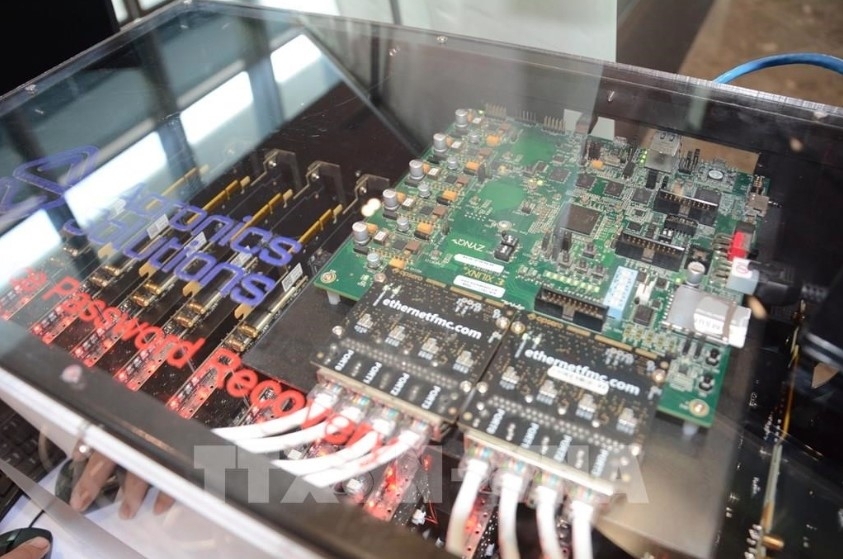
According to Nguyen Van Minh, Head of the Wireless Technology and AI Computing Department at the Huawei Research Center in France, France and the European Union are prioritizing industrial advantages such as energy-efficient chips, automotive and telecom semiconductors, chiplets, advanced packaging, and AI computing. Rather than directly competing in ultra-advanced manufacturing nodes like 3nm or 2nm, France capitalizes on an ecosystem connecting industrial enterprises, research institutes, and universities.
Minh noted that Vietnam - France semiconductor cooperation has yet to yield concrete programs in core technologies. He emphasized distinguishing information technology and digital transformation from core semiconductor capabilities like chip design, AI accelerator architecture, semiconductor IP, or advanced packaging.
Collaborations such as that between Vietnam’s National Innovation Center (NIC) and France's Dassault Systèmes support industrial upgrading through digital twins and product lifecycle management, but serve primarily as supporting components alongside dedicated semiconductor initiatives.
For Vietnam, Minh recommended a pragmatic roadmap instead of focusing solely on leading-edge manufacturing. Rather than overemphasizing advanced nodes, Vietnam should target broader markets such as IoT, home appliances, automotive, and edge AI, which do not require the most advanced processes.
Vietnam’s roadmap could gradually move from raw materials, wafers, testing, and advanced packaging to chiplet capabilities, before expanding into mature manufacturing nodes such as 28nm and 20nm. Linking semiconductors with AI presents significant opportunities, enabling the country to build competitive advantages by combining algorithms, software, system architecture, and hardware design.
"He emphasized that human resources are a decisive factor and must cover the entire value chain: algorithms, hardware design (ASIC, circuit design, verification), and manufacturing (wafers, fabrication, packaging, and testing).
France is a valuable partner for Vietnam in sharing expertise on building high-tech ecosystems, Minh emphasized, adding that success depends less on adding strategic visions and more on execution capabilities backed by clear targets, resources, workforce, and accountability.
India’s semiconductor strategy offers lessons for Vietnam: Expert
VOV.VN - India has emerged as one of the most aggressive players pursuing a semiconductor development strategy, offering practical lessons and partnership opportunities for Vietnam, according to an Indian technology expert.
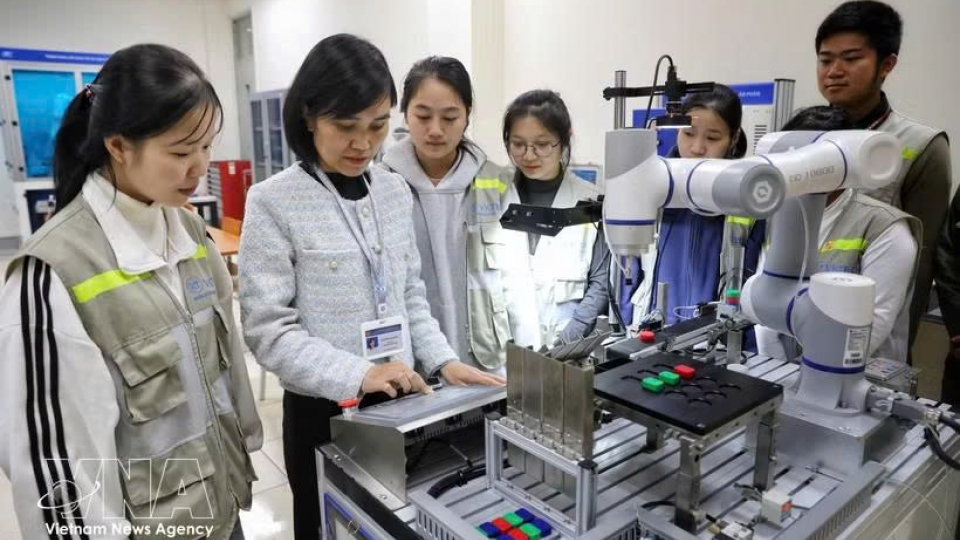
Vietnam-one of most attractive destinations for leading US semiconductor companies
Vietnam has emerged one of the most attractive destinations for leading US semiconductor companies, thanks to its competitive labour costs, political stability, favourable geographic location and extensive network of free trade agreements (FTAs).


